Human gene therapy is changing the way researchers and healthcare professionals approach certain genetic disorders, cancers and rare diseases. Instead of focusing only on symptoms, some gene therapies are designed to correct, replace, add or modify genetic material involved in disease.
Advances in biotechnology, molecular biology and genome editing have transformed gene therapy from an experimental concept into an established treatment platform for selected medical conditions. At the same time, many potential applications remain under clinical investigation.
This article explores ten important benefits and applications of human gene therapy and explains how this rapidly developing field is contributing to modern medicine.
What Is Human Gene Therapy?
Gene therapy involves modifying genetic material within a patient’s cells for a therapeutic purpose. Depending on the treatment, this may involve introducing a functioning copy of a gene, modifying an existing gene, changing gene expression or genetically engineering cells outside the body before returning them to the patient.
Gene therapies can use several delivery approaches, including specially engineered viral vectors and gene-editing technologies. The appropriate method depends on the disease, target tissue and biological mechanism involved.
Benefit 01
Targeting the Underlying Cause of Genetic Disease
One of the most important benefits of gene therapy is its ability to address the biological cause of certain diseases rather than treating symptoms alone. When a disease results from a specific genetic abnormality, therapy may be designed to replace a defective gene, modify its activity or compensate for its effects. This creates the possibility of long-lasting therapeutic benefits for selected genetic disorders.
Benefit 02
Genetically Engineered Immune Cells for Cancer Treatment
Gene modification has become an important part of cancer treatment through therapies such as CAR T-cell therapy. In this approach, T cells are collected from a patient and genetically modified in a laboratory so that they produce chimeric antigen receptors, or CARs.
These engineered receptors help the T cells recognize specific targets on cancer cells. The modified cells are then expanded and infused back into the patient. CAR T-cell therapies are currently used for selected blood cancers, while researchers continue to investigate their potential in additional cancers.
Benefit 03
Treatment of Certain Inherited Retinal Diseases
Some inherited retinal disorders are caused by mutations that interfere with proteins needed for normal vision. Gene therapy can provide functional genetic material directly to retinal cells in selected patients.
A well-established example involves inherited retinal dystrophy associated with mutations in both copies of the RPE65 gene. Gene replacement therapy can introduce a functioning version of the gene into retinal cells and may improve functional vision in eligible patients.
Benefit 04
Gene Replacement for Spinal Muscular Atrophy
Spinal muscular atrophy, commonly known as SMA, is a genetic neuromuscular disorder that can result from mutations affecting the survival motor neuron 1 (SMN1) gene.
Gene replacement therapy can deliver a functional copy of SMN1 to help motor neurons produce the protein required for normal function. This represents an important example of how gene therapy can target the underlying molecular mechanism of an inherited disorder.
Benefit 05
New Approaches to Inherited Immune Disorders
Gene therapy has also been studied and developed for severe inherited immune disorders such as adenosine deaminase severe combined immunodeficiency (ADA-SCID) and X-linked severe combined immunodeficiency (SCID-X1).
Some approaches involve collecting a patient’s blood-forming stem cells, genetically correcting them outside the body and returning the modified cells to the patient. The objective is to restore the production and function of immune cells capable of protecting the body against infection.
Benefit 06
Precise Genome Editing With CRISPR Technology
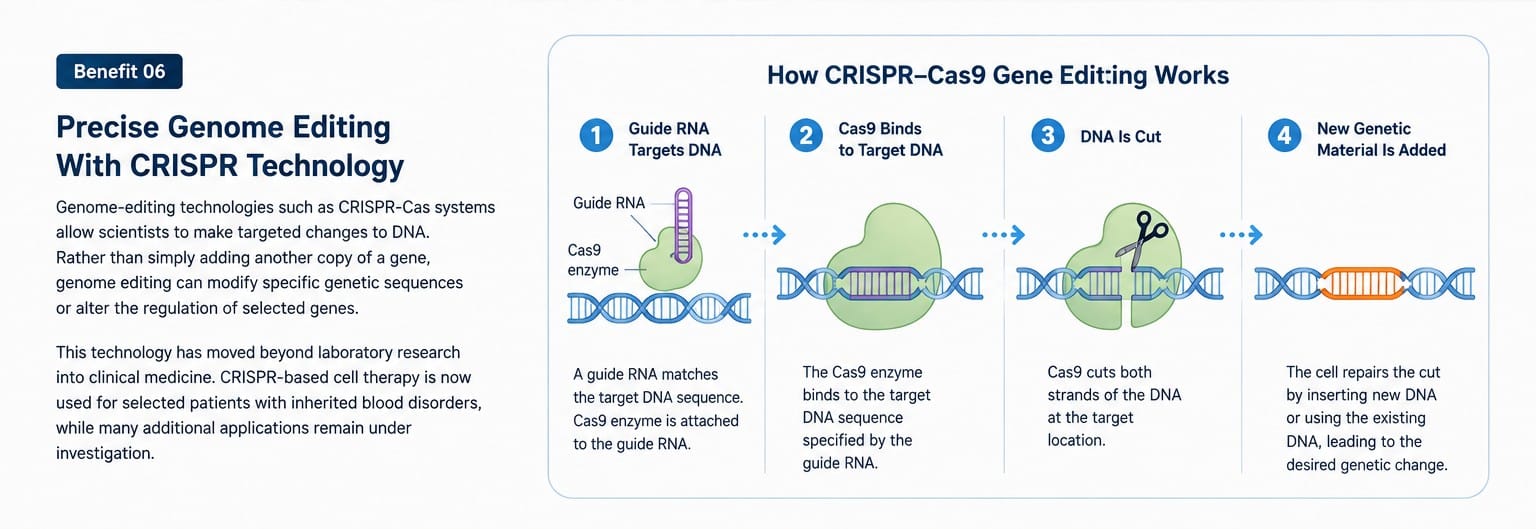
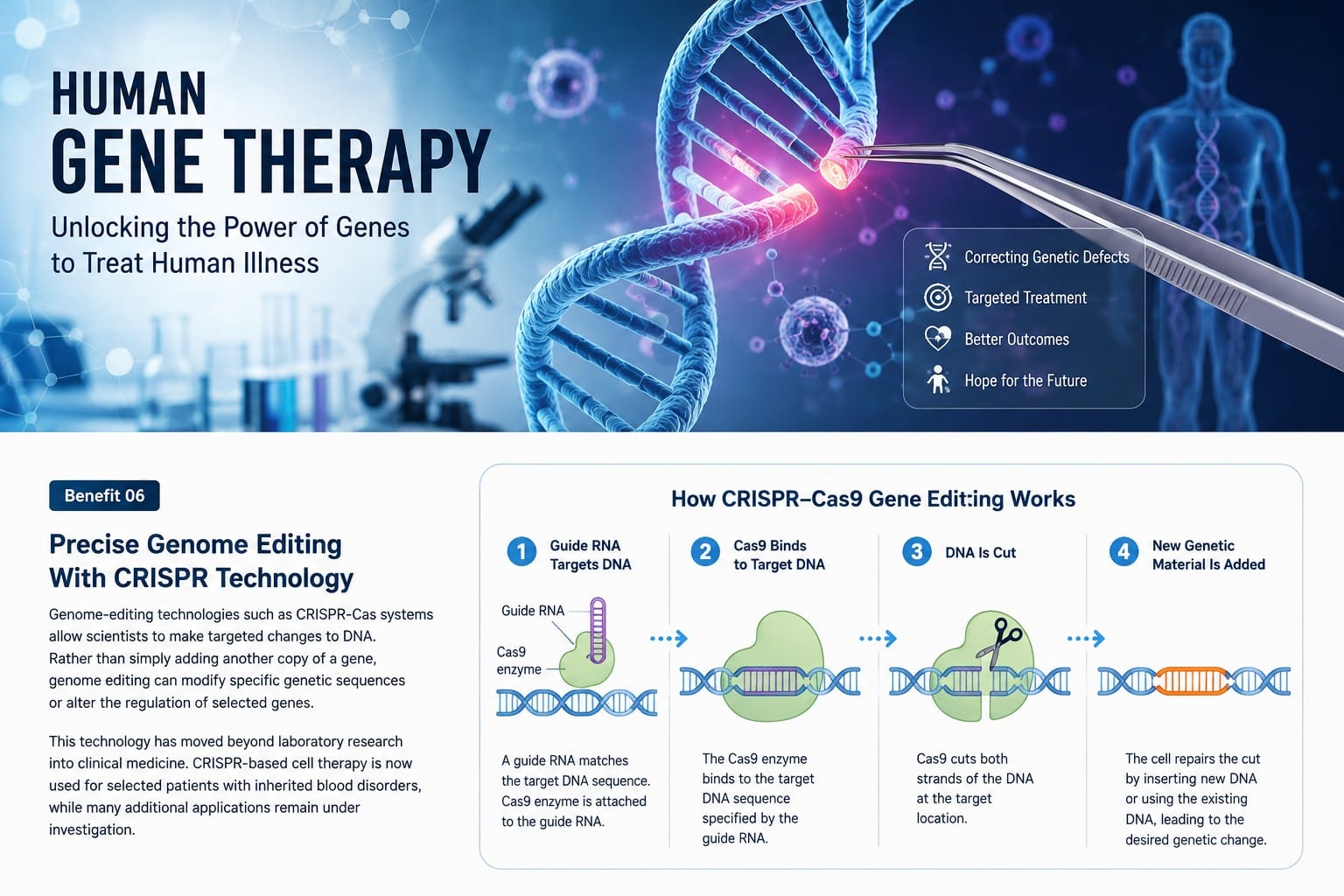
Genome-editing technologies such as CRISPR-Cas systems allow scientists to make targeted changes to DNA. Rather than simply adding another copy of a gene, genome editing can modify specific genetic sequences or alter the regulation of selected genes.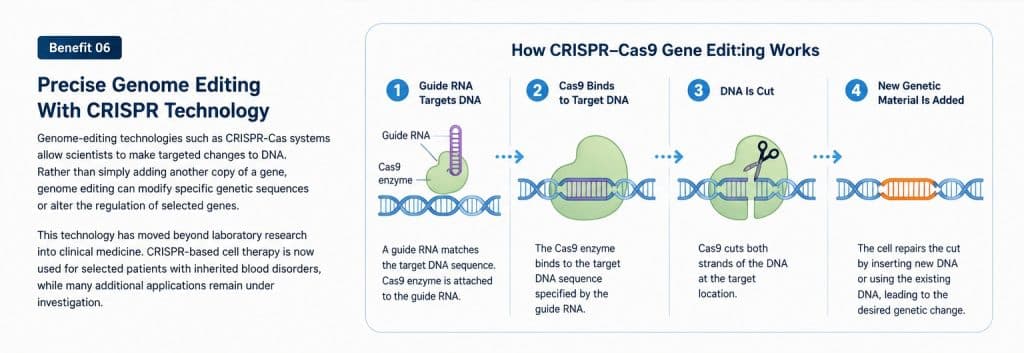
This technology has moved beyond laboratory research into clinical medicine. CRISPR-based cell therapy is now used for selected patients with inherited blood disorders, while many additional applications remain under investigation.
Benefit 07
Major Advances in Sickle Cell Disease
Sickle cell disease is caused by changes affecting haemoglobin in red blood cells. Modern gene therapies can modify a patient’s own blood-forming stem cells to change haemoglobin production and reduce the biological processes responsible for severe disease.
The approval of gene therapies for sickle cell disease, including a CRISPR-based treatment, represents an important milestone in genetic medicine and demonstrates that genome editing can provide meaningful clinical benefits.
Benefit 08
Potential for Long-Lasting Treatment Effects
Some gene therapies are designed to provide therapeutic effects after a single administration or treatment course. This differs from many conventional medications that must be taken repeatedly to control symptoms. The duration of benefit varies considerably between therapies and patients, and long-term follow-up remains an important part of gene-therapy safety monitoring.
Benefit 09
Expanding Treatment Options for Rare Diseases
Many rare diseases are caused by identifiable genetic changes and historically have had few disease-modifying treatment options. Gene therapy creates a pathway for developing highly targeted therapies for some of these conditions. Advances in sequencing, vector technology and cell engineering are helping researchers identify additional diseases that may be suitable for gene-based treatment.
Benefit 10
Creating New Possibilities for Future Treatments
Researchers continue to investigate gene-based approaches for conditions including Huntington disease, HIV infection, chronic granulomatous disease and many other inherited or acquired disorders.
These applications should not all be considered established treatments. Many remain in preclinical studies or clinical trials. However, continued research in vector design, genome editing, stem-cell engineering and targeted delivery is expanding the potential scope of human gene therapy.
Benefits Must Be Balanced With Safety and Clinical Considerations
Although gene therapy offers significant potential, these treatments are scientifically complex and are not appropriate for every patient or disease. Potential risks depend on the therapy and may include immune reactions, treatment-related toxicity, unintended genetic effects and complications associated with cell collection or conditioning therapy.
Gene therapies therefore require rigorous clinical testing, regulatory review, manufacturing controls and long-term patient monitoring. Treatment decisions must always be made by qualified healthcare professionals based on an individual’s diagnosis and clinical circumstances.
The Future of Human Gene Therapy
Human gene therapy has developed rapidly from an experimental research concept into a treatment platform with real-world applications in cancer, inherited retinal disease, spinal muscular atrophy, sickle cell disease and other conditions.
Continued progress in biotechnology, genomics, clinical research and pharmaceutical development is likely to expand the number of conditions that can be approached through gene-based therapies. At the same time, careful research and regulatory oversight remain essential to establish the safety, effectiveness and durability of each treatment.