How a Personal Support Worker (PSW) Program Can Lead to PR Pathway in Canada
A Rewarding Career and Immigration Opportunity
Canada continues to experience a growing demand for healthcare professionals, especially Personal Support Workers (PSWs). As the country’s aging population increases, healthcare facilities, long-term care homes, retirement residences, and home care agencies are actively seeking qualified PSWs.
For many international students and newcomers, a PSW program offers not only a rewarding healthcare career but also a potential pathway toward Canadian Permanent Residence (PR).
What is a Personal Support Worker (PSW)?
A Personal Support Worker provides essential care and support to individuals who need assistance with daily living activities. PSWs work closely with seniors, individuals with disabilities, and patients recovering from illness or surgery.
Typical responsibilities include:
- Assisting with personal hygiene and grooming
- Helping with mobility and daily activities
- Providing companionship and emotional support
- Monitoring client well-being
- Assisting healthcare teams with patient care
PSWs are employed in:
- Long-term care homes
- Retirement residences
- Hospitals
- Home care agencies
- Community healthcare organizations
What is a PR Pathway in Canada?
A Permanent Residence (PR) pathway is an immigration route that allows eligible temporary residents, international students, and foreign workers to become permanent residents of Canada. Permanent residents can live, work, and study anywhere in Canada while enjoying many of the same benefits as Canadian citizens.
Canada offers various immigration pathways designed to address labour shortages and support economic growth. Many of these programs value Canadian education, Canadian work experience, and occupations that are in high demand, including healthcare professions.
For students pursuing a Personal Support Worker (PSW) career, a PR pathway may become available after obtaining relevant education and gaining Canadian work experience. Depending on eligibility requirements and government policies at the time of application, individuals may qualify through federal or provincial immigration programs.
Common factors that can strengthen an individual’s eligibility for Permanent Residence include:
- Completing a recognized Canadian educational program
- Obtaining skilled or eligible work experience in Canada
- Demonstrating language proficiency in English or French
- Receiving a provincial nomination through a Provincial Nominee Program (PNP)
- Securing employment in occupations experiencing labour shortages
Because healthcare workers are essential to Canada’s healthcare system, many provinces periodically prioritize healthcare-related occupations through targeted immigration streams. This can create additional opportunities for qualified PSWs seeking long-term settlement in Canada.
Why is the PSW Profession in High Demand?
Canada’s healthcare sector is facing significant workforce shortages. The demand for qualified PSWs continues to grow due to:
- An aging Canadian population
- Increased healthcare needs
- Expansion of home care services
- Ongoing demand in long-term care facilities
As a result, PSWs are considered an important occupation within Canada’s healthcare system.
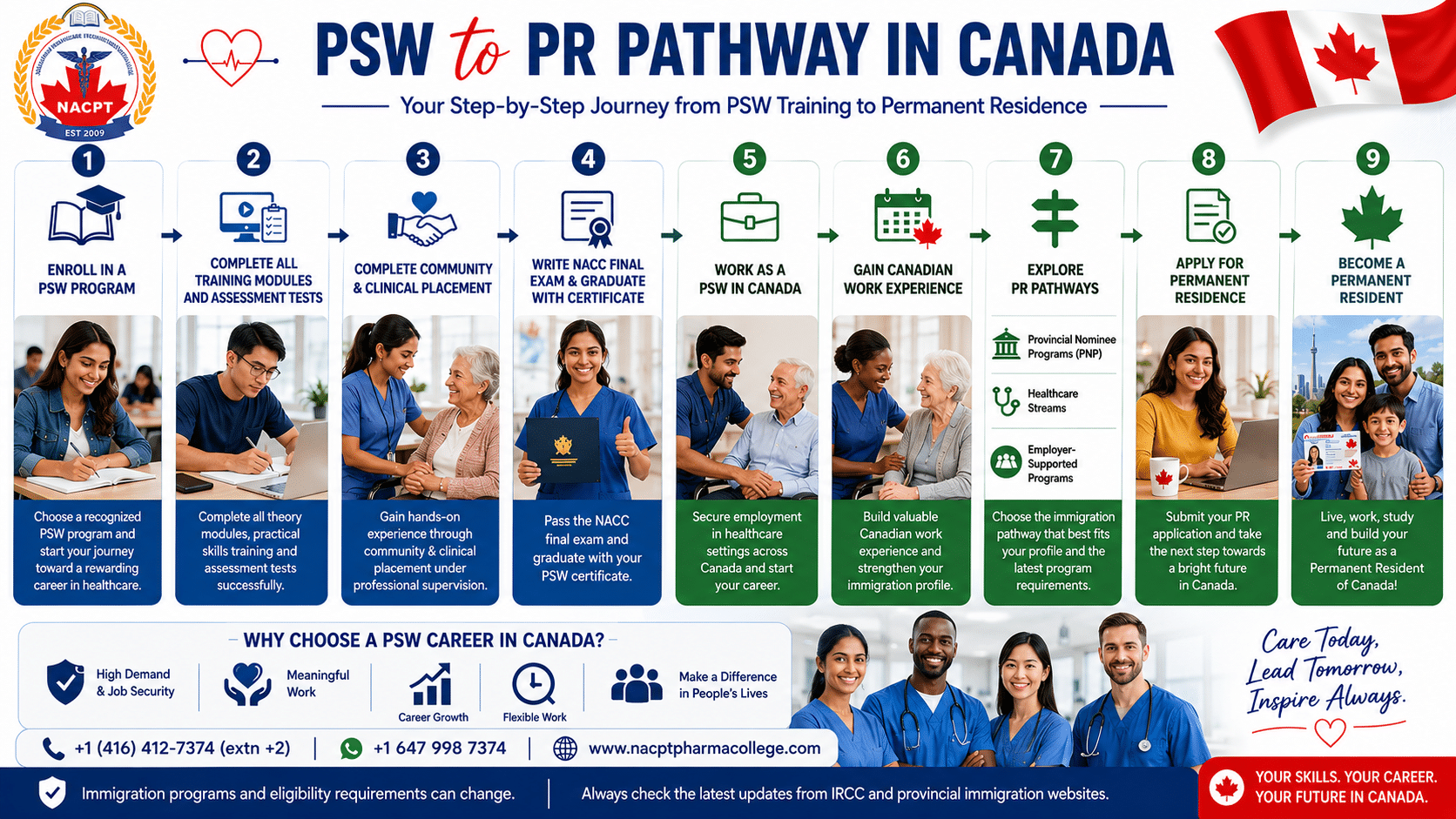
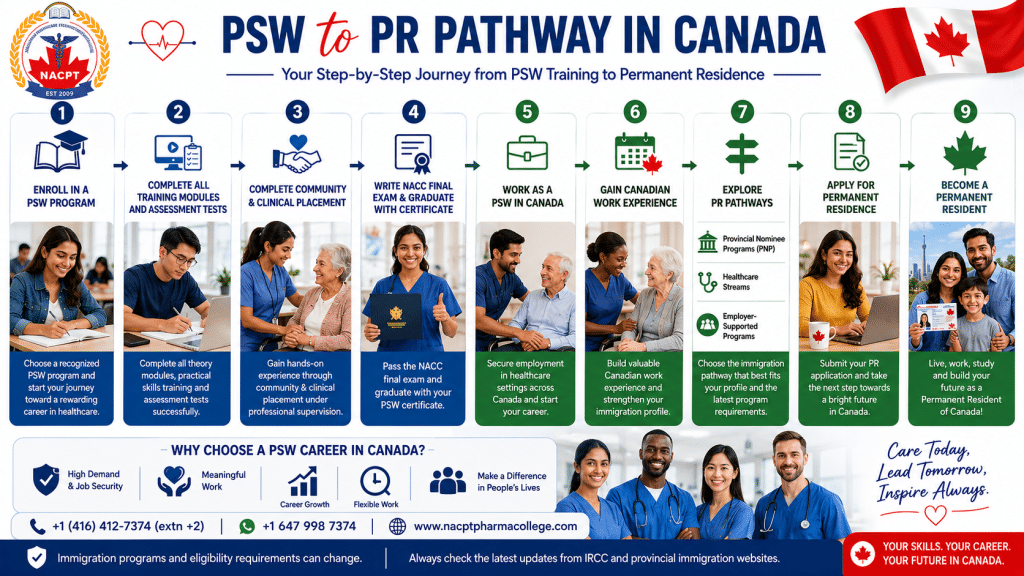
How Can a PSW Program Help You Move Toward PR?
Step 1: Complete a Recognized PSW Program
The first step is to enroll in and successfully complete a recognized PSW program. Students gain both theoretical knowledge and practical clinical experience through placements.
A quality PSW program typically includes:
- Personal care skills
- Infection prevention and control
- Patient safety
- Communication skills
- Clinical placement experience
- First Aid and CPR training
NACPT Pharma College provides a National Association of Career Colleges (NACC) approved program in the GTA via distance/hybrid mode of training, giving students the flexibility to complete the program from any province, city, or location across Canada.
Step 2: Obtain Employment as a PSW
After graduation, many students secure employment in healthcare settings across Canada.
Employers often include:
- Long-term care facilities
- Retirement homes
- Community care organizations
- Home healthcare agencies
- Hospitals
Because of the high demand for healthcare workers, many graduates find employment opportunities relatively quickly.
Step 3: Gain Canadian Work Experience
Canadian work experience is one of the most valuable factors when pursuing permanent residence.
Working as a PSW allows graduates to:
- Build healthcare experience in Canada
- Strengthen their immigration profile
- Meet eligibility requirements for various immigration programs
- Establish connections with employers who may support immigration applications
Step 4: Apply Through Eligible Immigration Programs
Once eligible, PSWs may qualify for various immigration pathways depending on federal and provincial program requirements.
Potential options may include:
Provincial Nominee Programs (PNPs)
Many provinces operate immigration streams that prioritize healthcare workers and occupations experiencing labour shortages.
Healthcare Occupation Streams
Several provinces periodically introduce targeted streams for healthcare professionals, including support workers and caregivers.
Employer-Supported Immigration Pathways
Some immigration programs recognize job offers and work experience from Canadian healthcare employers.
Home Care and Caregiver Pathways
Certain federal programs have been designed specifically for home support workers and caregivers when available.
Additional Benefits of Choosing a PSW Career
Job Security
Healthcare remains one of Canada’s most stable employment sectors.
Meaningful Work
PSWs make a significant difference in the lives of individuals and families every day.
Career Growth
Many PSWs continue their education and advance into careers such as:
- Practical Nursing
- Registered Nursing
- Healthcare Administration
- Community Health Services
Flexible Employment Opportunities
PSWs can work in a variety of healthcare settings with flexible schedules and career options.
Important Considerations
Immigration policies and eligibility requirements can change. Students should always review the latest information from Immigration, Refugees and Citizenship Canada (IRCC) and provincial immigration authorities.
Completing a PSW program does not automatically guarantee Permanent Residence. However, it can provide a strong foundation by offering:
- Healthcare education
- Canadian work experience
- Employment opportunities
- Access to immigration pathways that value healthcare occupations
Conclusion
A Personal Support Worker (PSW) program can be an excellent pathway for individuals seeking both a rewarding healthcare career and potential opportunities for Permanent Residence in Canada. With strong demand for healthcare workers across the country, PSWs play a critical role in supporting Canada’s healthcare system while building a successful future for themselves.
If you are passionate about helping others and are looking for a career with strong employment prospects, a PSW program may be the first step toward achieving your professional and immigration goals in Canada.
NACPT Pharma College
44 Queen Street
Brampton, Ontario
www.nacptpharmacollege.com