
What Is Cannabis Production Skill Training?
Cannabis production skill training focuses on the systems, procedures, and technical practices used within regulated cannabis cultivation and manufacturing environments. Students learn that commercial cannabis production involves much more than growing plants.
Licensed facilities must maintain controlled production conditions, follow established procedures, document activities accurately, manage quality risks, and remain prepared for regulatory inspections. Structured training helps students understand how these different responsibilities work together.
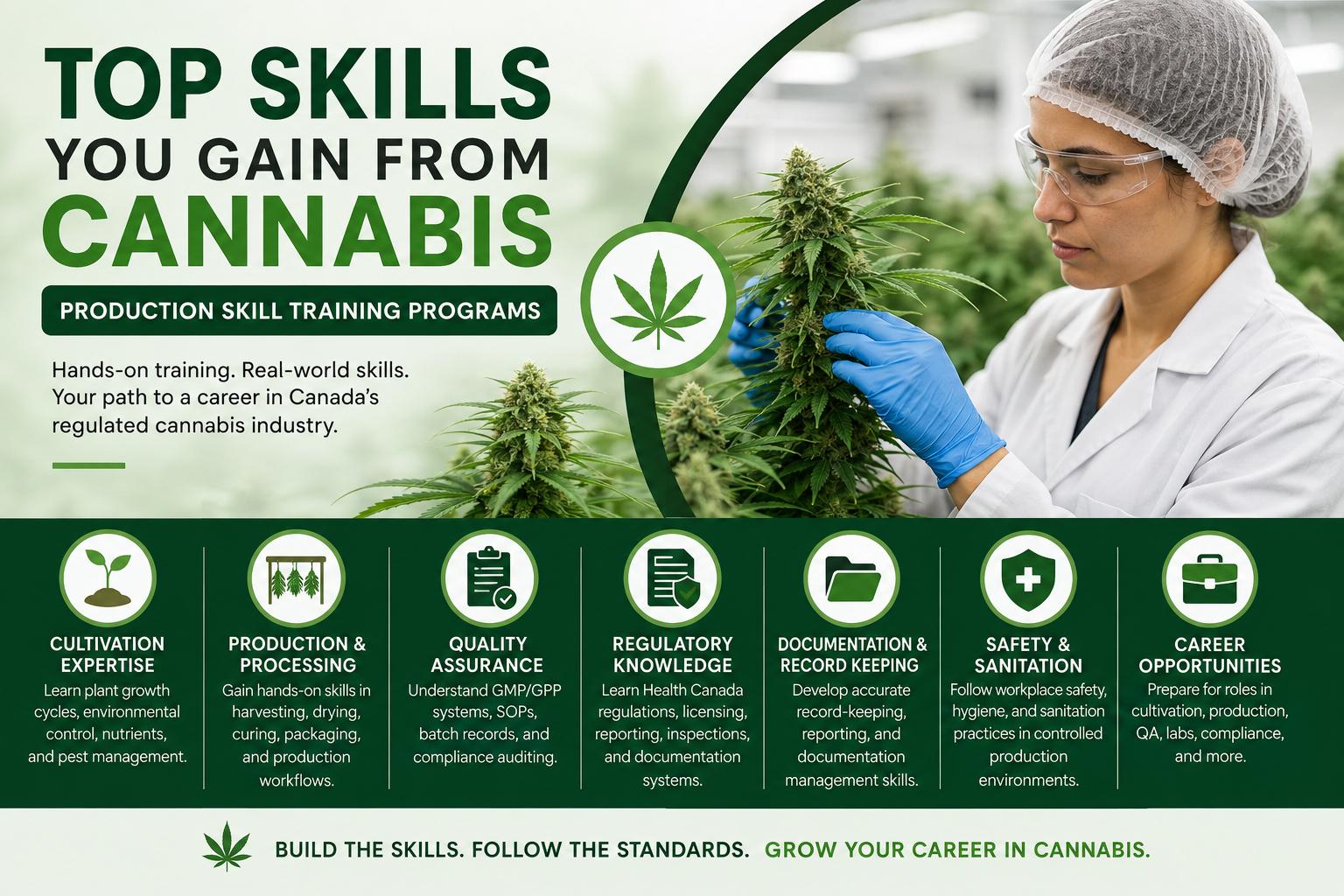
Core Skills You Will Develop
1. Cannabis Cultivation Expertise
Cultivation is one of the foundational areas of cannabis production training. Students learn how cannabis plants progress from propagation or seed through vegetative growth, flowering, and harvesting.
Important cultivation topics may include:
- Plant growth cycles: Understanding the different developmental stages of cannabis plants.
- Environmental control: Managing temperature, humidity, airflow, lighting, and other growing conditions.
- Nutrient management: Learning how plant nutrition can affect growth, health, and production consistency.
- Pest and disease control: Identifying potential threats and following appropriate prevention and control procedures.
These skills help students understand how cultivation teams maintain healthy plants while working toward consistent production outcomes.
2. Production and Processing Skills
After cultivation, cannabis products move through carefully managed harvesting and post-harvest processes. Training programs introduce students to the workflows used to protect product quality, reduce contamination risks, and prepare cannabis products for further processing or packaging.
Students may gain knowledge of:
- Harvesting procedures and production scheduling
- Drying and curing processes
- Trimming and post-harvest handling
- Packaging and labelling systems
- Material movement and production workflows
- Sanitation and contamination-control practices
Understanding these processes is important because product consistency depends on how carefully cannabis materials are handled throughout the production cycle.
3. Quality Assurance Skills
Quality assurance is a critical part of regulated cannabis production. Quality teams help confirm that procedures are followed, records are complete, deviations are investigated, and products meet established requirements.
Cannabis production skill training may introduce students to:
- GMP and GPP principles: Understanding structured systems used to maintain controlled and consistent production.
- Standard operating procedures: Learning how SOPs define approved methods for completing production activities.
- Batch record review: Checking production documentation for completeness, accuracy, and compliance.
- Deviation management: Understanding how unexpected events or process variations are documented and reviewed.
- Compliance auditing: Evaluating whether facility operations follow established procedures and regulatory expectations.
These competencies are valuable because cannabis employers operate in quality-controlled environments where documentation and process consistency are essential.
4. Regulatory Compliance Knowledge
Canada’s cannabis industry operates within a detailed regulatory framework. Employees must understand that cultivation, processing, storage, packaging, testing, and distribution activities are subject to established requirements.
Training can help students become familiar with:
- Health Canada licensing requirements
- Regulatory reporting standards
- Inspection and audit readiness
- Record-keeping and documentation systems
- Security and controlled-access procedures
- Product tracking and traceability requirements
This knowledge helps students understand why cannabis production facilities must follow approved procedures and maintain accurate records throughout their operations.
5. Documentation and Record-Keeping Skills
Documentation is a major component of cannabis production. Employees may be required to record cultivation activities, environmental conditions, material usage, cleaning procedures, production steps, deviations, and quality checks.
Students learn the importance of:
- Completing records accurately and on time
- Following approved document formats
- Maintaining data integrity
- Correcting documentation errors appropriately
- Supporting product traceability
- Preparing records for internal or regulatory review
Strong documentation practices can support product quality, operational accountability, and regulatory compliance.
6. Controlled-Environment Production Skills
Commercial cannabis cultivation frequently takes place in controlled indoor environments or specialized greenhouse facilities. Students may learn how production teams monitor environmental variables to support plant health and consistent growth.
This can include an understanding of:
- Temperature and humidity monitoring
- Lighting schedules and intensity
- Air circulation and ventilation
- Irrigation and nutrient-delivery systems
- Environmental alarms and corrective actions
- Facility cleanliness and sanitation controls
These skills provide students with a broader understanding of how technology and environmental management support large-scale cannabis production.
7. Workplace Safety and Sanitation
Cannabis production employees may work around cultivation equipment, processing machinery, cleaning agents, fertilizers, biological materials, and controlled production areas. Training helps students understand the importance of workplace safety and sanitation procedures.
Relevant skills may include:
- Using personal protective equipment correctly
- Following hygiene and gowning procedures
- Preventing cross-contamination
- Handling production materials safely
- Following cleaning and sanitation procedures
- Reporting workplace hazards or incidents
Why These Cannabis Production Skills Matter
Employers in Canada’s cannabis sector require workers who understand that production must take place within structured, quality-controlled, and compliance-driven environments.
Employers may prioritize candidates who demonstrate knowledge of:
- Regulated production systems
- Quality assurance principles
- Controlled cultivation environments
- Standard operating procedures
- Accurate documentation practices
- Sanitation and contamination prevention
- Inspection and audit readiness
Developing these competencies can help graduates communicate more effectively with cultivation, production, quality assurance, laboratory, and compliance teams.
Potential Career Environments
Graduates of cannabis production training programs may explore opportunities within different areas of the regulated cannabis sector, depending on their qualifications, experience, and employer requirements.
Potential work environments include:
- Licensed cannabis cultivation facilities
- Cannabis production and processing companies
- Cannabis testing laboratories
- Manufacturing and packaging operations
- Quality assurance departments
- Regulatory and compliance departments
- Research and product-development environments
Possible Cannabis Industry Roles
Depending on a graduate’s education, practical experience, and the requirements of individual employers, cannabis production training may support pathways toward roles such as:
- Cultivation Technician
- Production Technician
- Post-Harvest Technician
- Processing or Packaging Associate
- Quality Assurance Associate
- Documentation or Compliance Assistant
- Laboratory Support Technician
- Sanitation or Facility Operations Technician
Who Can Benefit From Cannabis Production Training?
Cannabis production skill training may be suitable for individuals interested in plant science, controlled-environment agriculture, pharmaceutical-style manufacturing, biotechnology, laboratory operations, quality assurance, or regulatory compliance.
It may also benefit individuals seeking a structured introduction to the operational requirements of Canada’s regulated cannabis industry rather than relying only on informal cultivation experience.
Build Practical Skills for Canada’s Cannabis Industry
Cannabis production skill training provides a structured foundation for understanding how cultivation, processing, quality assurance, documentation, safety, and regulatory compliance work together within licensed cannabis facilities.
By developing both technical production knowledge and compliance-focused skills, students can become better prepared to pursue entry-level opportunities and continue building their careers within Canada’s regulated cannabis sector.
Explore Cannabis Production Training at NACPT
Learn more about structured cannabis cultivation, production, quality assurance, and regulatory training designed for Canada’s cannabis industry.