Successful cannabis production begins with an understanding of plant genetics, growing conditions, environmental controls and post-harvest practices. In Canada’s regulated cannabis industry, professional cultivation also requires consistency, sanitation, documentation and compliance with established production procedures.
A Master Grower may be involved in planning and supervising many stages of cannabis production, from propagation and vegetative growth to flowering, harvesting, drying and storage.
The following eight Master Grower practices highlight important areas of knowledge for individuals interested in commercial cannabis cultivation and production in Canada.
Practice 01
Choosing the Right Genetics
The cultivation process begins with selecting suitable plant genetics. Genetics can influence characteristics such as plant structure, growth behaviour, flowering time, yield potential, cannabinoid profile, terpene profile and susceptibility to certain plant-health problems.
In commercial cannabis production, genetic selection should be based on the production objectives of the facility as well as the available growing environment, cultivation system and quality requirements. Maintaining consistency and traceability becomes especially important when cannabis is produced on a commercial scale.
Practice 02
Using an Appropriate Growing Medium
Cannabis can be cultivated using several production systems, including soil-based, soilless and hydroponic methods. The appropriate growing medium depends on the cultivation method, irrigation strategy, facility design and production goals.
Important characteristics of a growing medium can include drainage, water retention, aeration, pH stability and compatibility with the nutrient-management system. A suitable substrate helps support healthy root development and consistent plant growth.
Practice 03
Managing Lighting Effectively
Lighting is one of the most important environmental factors in indoor cannabis cultivation. Commercial growers must consider light intensity, distribution, photoperiod, energy consumption and heat production when designing a lighting strategy.
Modern cultivation facilities commonly use technologies such as LED and high-intensity lighting systems. The objective is not simply to provide as much light as possible, but to create an efficient and controlled lighting environment appropriate for the plant’s stage of development.
Practice 04
Maintaining the Proper Growing Climate
Temperature, humidity and airflow can significantly affect cannabis plant development. These environmental conditions also influence plant stress, moisture management and the potential development of mould or other plant-health problems.
Environmental requirements can change during propagation, vegetative growth and flowering. Commercial facilities therefore use monitoring and environmental-control systems to maintain appropriate and repeatable growing conditions throughout the production cycle.
Practice 05
Managing Water and Nutrients
Both overwatering and underwatering can negatively affect cannabis plants. Excessive moisture may contribute to poor root conditions and plant-health problems, while insufficient irrigation can lead to dehydration and reduced growth.
Irrigation frequency should therefore be based on factors such as the growing medium, plant size, environmental conditions, root development and the production system being used.
Nutrient programs also require careful management. Commercial growers monitor plant response and cultivation conditions rather than relying on a single nutrient or watering schedule for every crop.
Practice 06
Training and Managing Cannabis Plants
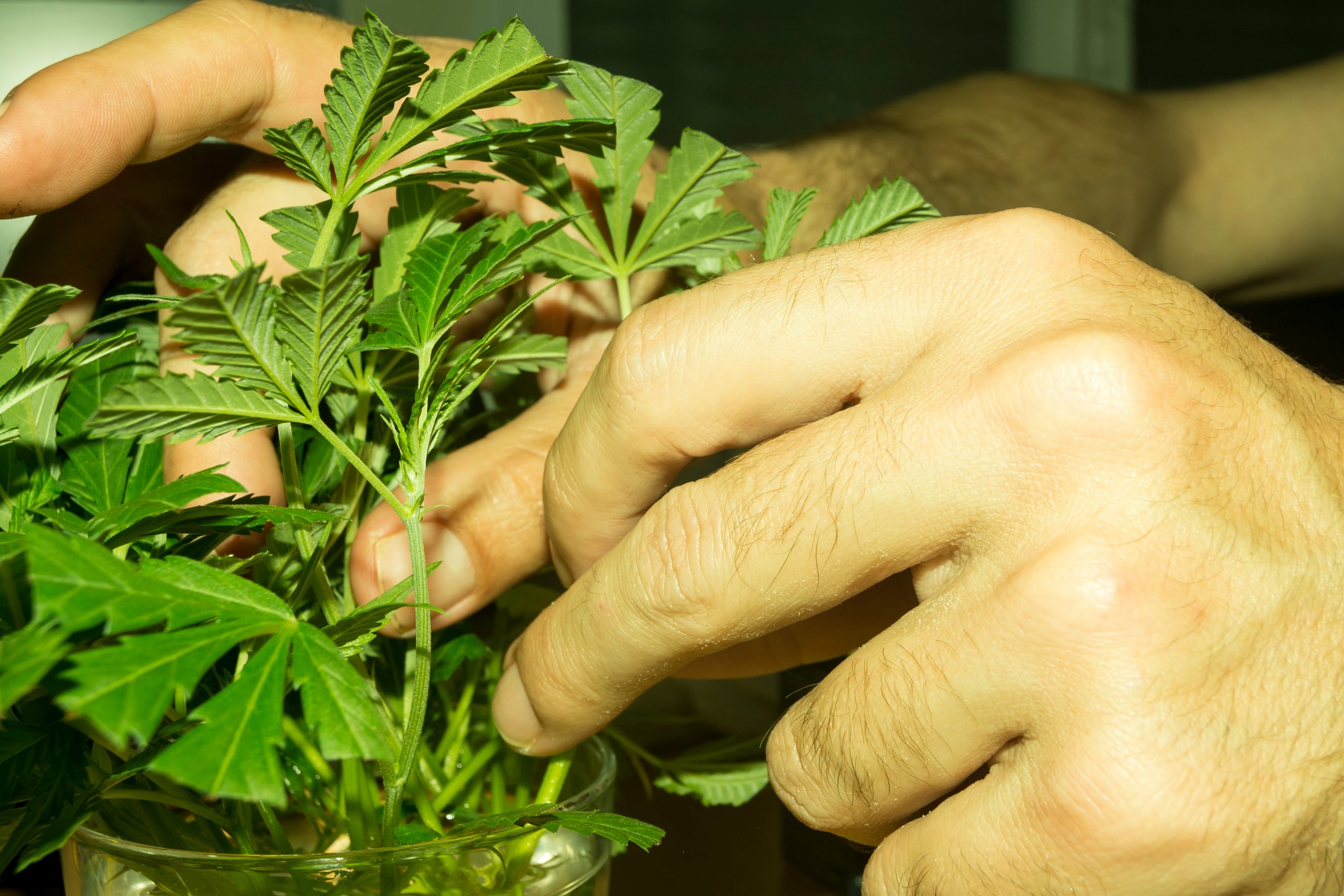
Plant-training and canopy-management techniques can help commercial growers make better use of cultivation space while improving light distribution and airflow throughout the crop.
Techniques may include pruning, plant support and other methods selected according to the cultivar, facility design and production objectives.
Tools and equipment used for plant maintenance should also be handled according to appropriate sanitation procedures to reduce the possibility of transferring pests, pathogens or contamination between plants.
Practice 07
Harvesting at the Appropriate Time
Determining when a cannabis crop is ready for harvest requires an understanding of plant maturity, cultivar characteristics and the quality specifications established for the crop.
Visual plant characteristics and trichome development may be among the indicators evaluated during crop monitoring. However, commercial harvest decisions should follow the production procedures and quality requirements established by the facility.
Harvesting also requires coordination of personnel, equipment, sanitation, batch identification, documentation and the movement of harvested material into controlled post-harvest areas.
Practice 08
Drying, Curing and Post-Harvest Management
Drying and curing are important stages in cannabis production because post-harvest conditions can influence moisture, aroma, product stability and overall quality.
Temperature, humidity, airflow, sanitation and material handling need to be controlled throughout post-harvest processing. The appropriate drying and curing conditions can vary according to cultivar, facility procedures and intended product specifications.
In professional cannabis production, post-harvest activities should be documented and managed as part of the facility’s overall production and quality system.
Professional Master Grower Skills Go Beyond Growing Plants
Commercial cannabis cultivation combines plant science with facility operations, quality systems and regulatory awareness. A cultivation professional may need knowledge in areas such as:
Plant Genetics
Understanding cultivars, propagation and plant characteristics.
Plant Health
Monitoring pests, diseases and crop health.
Environmental Control
Managing lighting, airflow, temperature and humidity.
Sanitation
Maintaining clean production areas and equipment.
Record Keeping
Maintaining production records and traceability.
Quality & Compliance
Understanding regulated commercial production practices.
Learn Cannabis Master Grower Practices
Pharma College offers
Cannabis Master Grower Practices training
designed to introduce participants to commercial cannabis cultivation practices and Canada’s regulated production environment.
Training covers areas such as cultivation practices, propagation, vegetative and flowering stages, harvesting, drying, trimming, curing, storage, record keeping, lighting, nutrients, watering, substrates and plant management.
Students looking for broader cannabis-industry education can also explore
Industrial Cannabis Production Technology
.